

A control arm and a shock absorber are two crucial components in a vehicle's suspension system. Their harmonious interaction is fundamental to ensuring a smooth, stable, and safe driving experience. As a control arm supplier, I have in - depth knowledge of how these two parts work together, and I'm excited to share this information with you.
The Basics of a Control Arm
The control arm, also known as an A - arm or wishbone, is a vital link between the vehicle's frame and the wheel assembly. It is typically a metal component with a shape resembling the letter "A" or a wishbone. The control arm has two main functions: to provide a pivot point for the wheel to move up and down and to transfer the forces between the wheel and the vehicle's frame.
One end of the control arm is attached to the vehicle's frame through a bushing, which allows for a certain degree of flexibility and dampens vibrations. The other end is connected to the steering knuckle, which holds the wheel hub. This connection enables the wheel to move vertically in response to road irregularities while maintaining proper alignment.
The Role of a Shock Absorber
A shock absorber, on the other hand, is designed to control the movement of the suspension system. When a vehicle hits a bump or pothole, the suspension compresses and rebounds. Without a shock absorber, the suspension would continue to bounce up and down, making the ride uncomfortable and difficult to control.
The shock absorber works by converting the kinetic energy of the bouncing suspension into heat energy. Inside the shock absorber, there is a piston that moves through a cylinder filled with hydraulic fluid. As the piston moves, it forces the fluid through small holes or valves, creating resistance. This resistance slows down the movement of the suspension and reduces the bouncing.
How They Work Together
When a vehicle encounters an uneven surface, such as a speed bump or a pothole, the wheel moves upward. The control arm, being connected to the wheel and the frame, allows this upward movement to occur smoothly. As the wheel moves up, the control arm pivots around its bushing connection to the frame.
At the same time, the shock absorber starts to compress. The upward movement of the wheel causes the piston inside the shock absorber to move through the hydraulic fluid. The shock absorber then provides resistance, dampening the upward movement of the wheel. This prevents the wheel from hitting the vehicle's body and also reduces the impact felt by the passengers.
When the wheel moves back down after going over the bump, the control arm pivots in the opposite direction, guiding the wheel back to its normal position. The shock absorber also extends during this process, again providing resistance to control the downward movement of the wheel. This ensures that the wheel makes smooth contact with the road surface, maintaining traction and stability.
Importance of Their Interaction
The proper interaction between the control arm and the shock absorber is essential for several reasons. Firstly, it improves ride comfort. By controlling the up - and - down movement of the wheels, the combination of the control arm and shock absorber reduces the jolts and vibrations that passengers feel inside the vehicle.
Secondly, it enhances vehicle handling. A well - functioning suspension system allows the wheels to maintain better contact with the road surface. This improves traction, which is crucial for steering, braking, and accelerating. When the control arm and shock absorber work together effectively, the vehicle can respond more accurately to the driver's inputs, making it safer and easier to drive.
Thirdly, it helps to protect other components of the vehicle. By absorbing and distributing the forces generated by road irregularities, the control arm and shock absorber reduce the stress on other parts of the suspension system, such as the springs, ball joints, and steering components. This can extend the lifespan of these components and reduce maintenance costs.

Compatibility and Maintenance
For the control arm and shock absorber to work together optimally, they need to be compatible. Different vehicles have different suspension requirements, and the control arm and shock absorber must be designed to fit the specific make and model of the vehicle. As a control arm supplier, we offer a wide range of control arms that are engineered to work in harmony with various shock absorbers.
Regular maintenance is also crucial for the proper functioning of the control arm and shock absorber. The control arm bushings can wear out over time, which can lead to increased play and reduced stability. Similarly, the shock absorber can lose its effectiveness due to leaks or worn - out internal components. It is recommended to have the suspension system inspected regularly by a professional mechanic to ensure that the control arm and shock absorber are in good condition.
Related Products
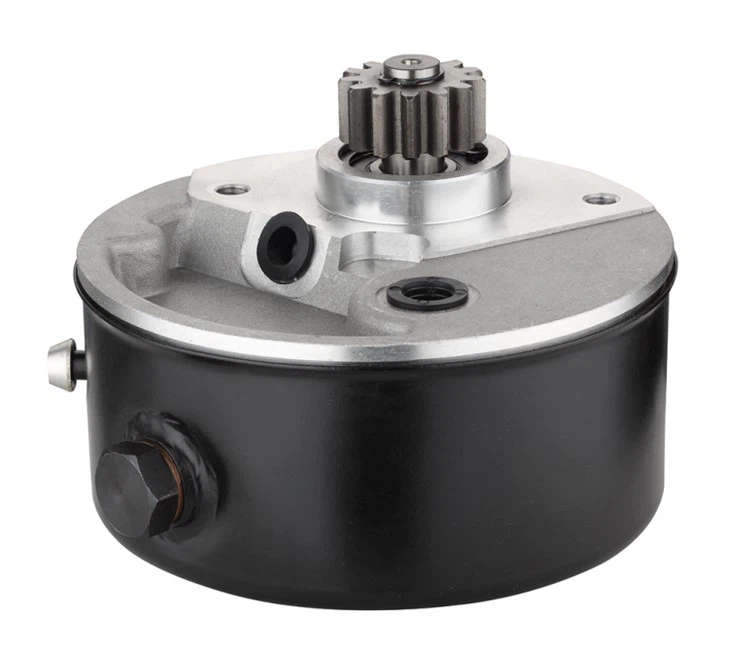
If you are interested in other automotive parts, we also have some related products to offer. For example, we have the Hydraulic Gear Pump Steering Pump for Tractor 527904m93 773126m92, which is an essential component for tractor steering systems. Another product is the Hydraulic Gear Pump for Tractor Auto Parts 5180271, which plays a vital role in the tractor's hydraulic system. And we also provide the OIL PUMP 150001650R OPEL 1.6 CDTI NISSAN RENAULT 1.6 DCI R9M for lubrication systems in certain vehicles.
Contact Us for Purchase
If you are in the market for high - quality control arms or any of the related products mentioned above, we are here to assist you. Our team of experts can help you select the right parts for your vehicle and provide you with detailed information about installation and maintenance. Whether you are a professional mechanic, a vehicle owner, or a distributor, we welcome you to contact us for purchase and further discussion. We are committed to providing you with the best products and services to meet your automotive needs.
References
- "Automotive Suspension Systems" by Jack Erjavec.
- "Chassis Systems Design, Principles and Analysis" by Rajesh Rajamani.